How Lexus IS Generations Kept the Sport Sedan Alive

Few nameplates show Lexus changing its mind about sport sedans as clearly as the IS. It began as a compact rear-drive alternative with a straight-six and an eager chassis. It grew into a polished luxury sedan, then survived a market that keeps declaring sedans finished. The result is a story with three core generations, several memorable detours, and a 2026 update that gives the current car another reason to stay.
For enthusiasts, the appeal is not one engine or one styling cue. Each Lexus IS generation represents a different answer to the same question: how can Lexus deliver quiet ownership and real driver involvement in one compact package? The upcoming Lexus IS refresh is the latest answer, with a much-needed digital cabin and focused chassis work rather than a clean-sheet replacement.
The Toyota Altezza created the IS blueprint
The first IS arrived in Japan in October 1998 as the Toyota Altezza. Lexus brought it to Europe as the IS 200 and to North America for 2001 as the IS 300. Its mission was direct and unusual for Lexus at the time. It had to be compact, rear-wheel drive, responsive, and credible beside the BMW 3 Series.
North American buyers received the 3.0-liter 2JZ-GE inline-six. That naturally aspirated engine did not turn the IS 300 into a super sedan, but it gave the car smooth torque and a character that has aged well. A five-speed manual became available later, adding another reason the car still has an audience.
The cabin was equally memorable. The chronograph-style gauge cluster looked like a precision watch, while the clear-lens rear lamps became so influential that aftermarket copies gained the nickname Altezza lights. The original car made a strong first impression because it looked and drove unlike the quieter Lexus sedans around it.
Why the XE10 still matters
A compact rear-drive layout
Its proportions put the engine up front and driven wheels at the rear, which gave the chassis a natural balance.
A durable straight-six identity
The 2JZ-GE brought smoothness and tuning interest without relying on forced induction.
A rare SportCross option
Lexus added a five-door SportCross, a practical variation that remains a cult choice.
The XE20 moved upmarket without losing ambition
The 2005 second-generation IS, known as XE20, looked and felt more expensive. Lexus applied its L-finesse design language, stretched the car’s visual presence, and replaced the old inline-six formula with a family of V6 engines. Better isolation, stronger safety credentials, and richer materials brought it closer to established German rivals.
That broader mission created a wider range. The IS 250 served as the accessible V6 choice, while the IS 350 gave the sedan real pace. Some markets also received the IS 220d diesel, a reminder that Lexus was trying to make the car relevant outside North America rather than treating it as a single-market specialty.
The defining XE20 arrived for 2008 as the IS F. Its 5.0-liter 2UR-GSE V8 produced 416 horsepower and sent it through an eight-speed automatic. It was the first Lexus F performance model, and its stacked exhaust outlets and wide body made the intent clear. The IS C hardtop convertible added another branch to the family tree.
The IS F changed the conversation
The IS F was not trying to mimic a regular IS with a louder exhaust. It gave Lexus a genuine answer to the BMW M3 and Mercedes-Benz C63 AMG of its era. The car carried extra weight and a firm edge, yet that V8 made it distinctive. It also proved Lexus could build a sedan for buyers who valued character as much as refinement.
A quick guide to three generations
Comparing the cars on a spec sheet misses the point. The IS evolved because its audience and Lexus itself changed. The table below is a useful starting point for anyone shopping used examples or trying to understand why owners defend different eras so fiercely.
Generation | Years | Character | Defining power |
XE10 | 1999–2005 | Compact and analog | Inline-six IS 300 |
XE20 | 2005–2013 | More premium and broader | V6 range and IS F V8 |
XE30 | 2013–present | Sharper and long-lived | V6, hybrid markets, IS 500 V8 |
2026 update | Early 2026 | Digital cabin and revised chassis | 311-hp IS 350 |
The XE10 is the purest enthusiast choice when condition and maintenance history are right. The XE20 is the better fit for buyers who want more luxury and a wider range of body styles. The XE30 offers the newest safety equipment and the broadest mix of modern performance, even before the 2026 update arrives.
The XE30 took a bolder visual direction
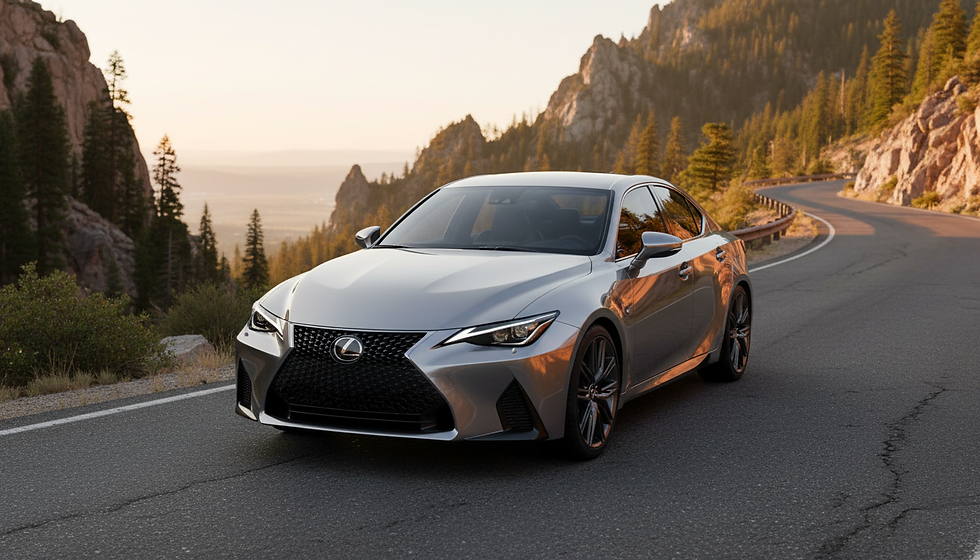
Lexus launched the third-generation XE30 in 2013. The car’s spindle grille made it instantly recognizable, and its lines were far more aggressive than those of the XE20. Beneath the styling, Lexus pursued a stiffer structure and sharper responses, while F Sport models emphasized a more focused driving position and suspension tuning.
The range also became more global. The IS 300h hybrid was important in Europe and parts of Asia, where fuel use and emissions mattered more than a large-displacement engine. In the United States, the IS 350 kept the 3.5-liter V6 at the center of the lineup, while a 2.0-liter turbo joined the range under IS 200t and later IS 300 badges.
This generation lasted far longer than normal, but Lexus did not leave it untouched. The 2021 model-year makeover gave the car a new exterior skin, a wider stance, updated lighting, and revised chassis tuning under the Lexus Driving Signature approach. It was still XE30 underneath, yet it looked like a determined attempt to make the sedan current again.
F Sport became the visual language
F Sport trim gave the IS an identity that reached beyond engine output. It brought more assertive bumpers, wheels, seats, and available adaptive hardware. That mattered because the standard car had to remain comfortable enough for daily use. Lexus used the trim to offer a sportier mood without forcing every owner into the hardest setup.
The IS 500 delivered a V8 farewell
In 2021, Lexus put the 5.0-liter V8 back into the IS. The IS 500 F Sport Performance produced 472 horsepower, making it a spiritual successor to the old IS F rather than a direct replacement. The formula was simple and increasingly rare: a naturally aspirated V8 in a compact luxury sedan, with no turbochargers between the throttle pedal and the soundtrack.
Its appeal lies in response as much as output. The engine revs cleanly and builds power in a way that smaller turbocharged units cannot fully copy. Lexus avoided an overly extreme body kit, so the IS 500 looks like a disciplined performance sedan until its wider fenders, quad exhaust outlets, and sound give the game away.
That makes the IS 500 significant even for people who will never own one. It is evidence that Lexus still understands the emotional side of the compact sport sedan. As the industry shifts toward hybrid and electric power, the V8 IS will likely remain a special endpoint in the history of the model.
The 2026 update fixes the cabin first
Lexus revealed the 2026 IS update in September 2025, with sales planned for early 2026. The most important changes are inside. A standard 12.3-inch touchscreen replaces the older trackpad-led interface, and wireless Apple CarPlay and Android Auto arrive with it. A 12.3-inch LCD instrument cluster brings the driver’s view up to date.
The redesigned center area keeps physical climate and volume controls, which should please drivers who dislike burying common tasks in a screen. Lexus also cites better storage and USB-C connectivity. Available Forged Bamboo trim uses resin and bamboo fibers, while Radiant Red is a new interior color choice. These are targeted changes, not empty decoration.
Outside, the 2026 IS receives a cleaner front fascia, new 19-inch wheel designs, and a larger standard rear spoiler on F Sport versions. Wind, a metallic light gray, joins the palette. The rear switches from a traditional emblem to LEXUS lettering across the trunk. The aim is a fresher look without erasing the car’s familiar stance.
Chassis and safety get quieter improvements
The refresh is not only about screens. Lexus says it revised the electric power steering and adopted linear solenoid-type Adaptive Variable Suspension on applicable models. Those changes matter because steering consistency and damping control shape a sport sedan every mile, not only during a hard corner. The best updates may be the ones drivers feel before they notice them.
Lexus Safety System+ 3.0 becomes standard. Its feature set includes Road Sign Assist, Proactive Driving Assist, and an enhanced pre-collision system. These additions bring the IS closer to newer Lexus models, while the sedan’s basic formula remains familiar. It is still a compact four-door built around a longitudinal engine and rear-drive proportions.
North America’s simplified 2026 lineup centers on the IS 350 and its 3.5-liter V6, rated at 311 horsepower. That means the four-cylinder IS 300 is gone from this version of the range. The choice is clearer, though enthusiasts will watch closely for final market details and whether the V8 IS 500 continues alongside the refreshed V6 models.
What has changed and what has not
The core layout remains familiar
The IS still prioritizes compact sedan proportions and a driver-focused rear-drive character.
The technology takes a major step forward
The touchscreen, digital instruments, wireless phone integration, and USB-C ports address the oldest cabin complaints.
The V6 stays central
For 2026 North America, the 311-hp IS 350 is the heart of the mainstream lineup.
The V8 story is now more emotional
The 472-hp IS 500 represents a rare formula and a key chapter in the badge’s legacy.
Which Lexus IS suits each kind of enthusiast
There is no universal best IS. A clean XE10 rewards drivers who value compact dimensions, a naturally aspirated inline-six, and a large enthusiast community. Its age means condition should outweigh mileage alone. Check service records, rust exposure, suspension wear, and whether modifications were done carefully rather than assuming every tuned example is a bargain.
The XE20 works for buyers who want a more polished daily car with a compelling performance ceiling. An IS 350 offers useful pace without the running costs of the IS F. The IS F is the collector-minded choice, provided its maintenance history supports the purchase. The convertible is a niche option, but it gives the generation a personality no other IS has matched.
The XE30 is the easiest path to modern ownership. Later cars benefit from the 2021 body and chassis revision, while the IS 500 supplies the headline engine. The 2026 update makes the newest V6 version the sensible choice for shoppers who want fresh technology but still prefer a traditional sedan. Choose the era that fits the experience you want, not merely the newest badge.
The IS has outlasted the expected script
Compact luxury sedans face shrinking demand, yet the Lexus IS has kept its place by refusing to become just another appliance. The original established the rear-drive, enthusiast-friendly idea. The second generation expanded the luxury and created the first F car. The third pushed styling, added global powertrain variety, and revived the V8 in an unlikely late-career moment.
The 2026 update does not pretend the IS is a new generation. It makes a more honest case: the chassis still has value, but the interior and electronic systems needed to catch up. A larger screen, digital gauges, revised steering, and newer safety hardware give the car a credible next chapter while preserving the parts that made it recognizable.
A final look before the next chapter
The Lexus IS generations tell a rare modern automotive story. Rather than discarding its identity at every cycle, Lexus has kept revisiting the same compact-sedan idea with different priorities. That continuity is why an Altezza-inspired XE10, a loud IS F, and a 2026 IS 350 can all feel related despite the years between them.
For anyone following the model, the next step is simple: watch the 2026 rollout closely, then drive the generation that best matches your taste. The latest car may offer the strongest cabin and safety package, but every IS generation has a clear reason to exist. That is more than most long-running sport sedans can claim.
Comments